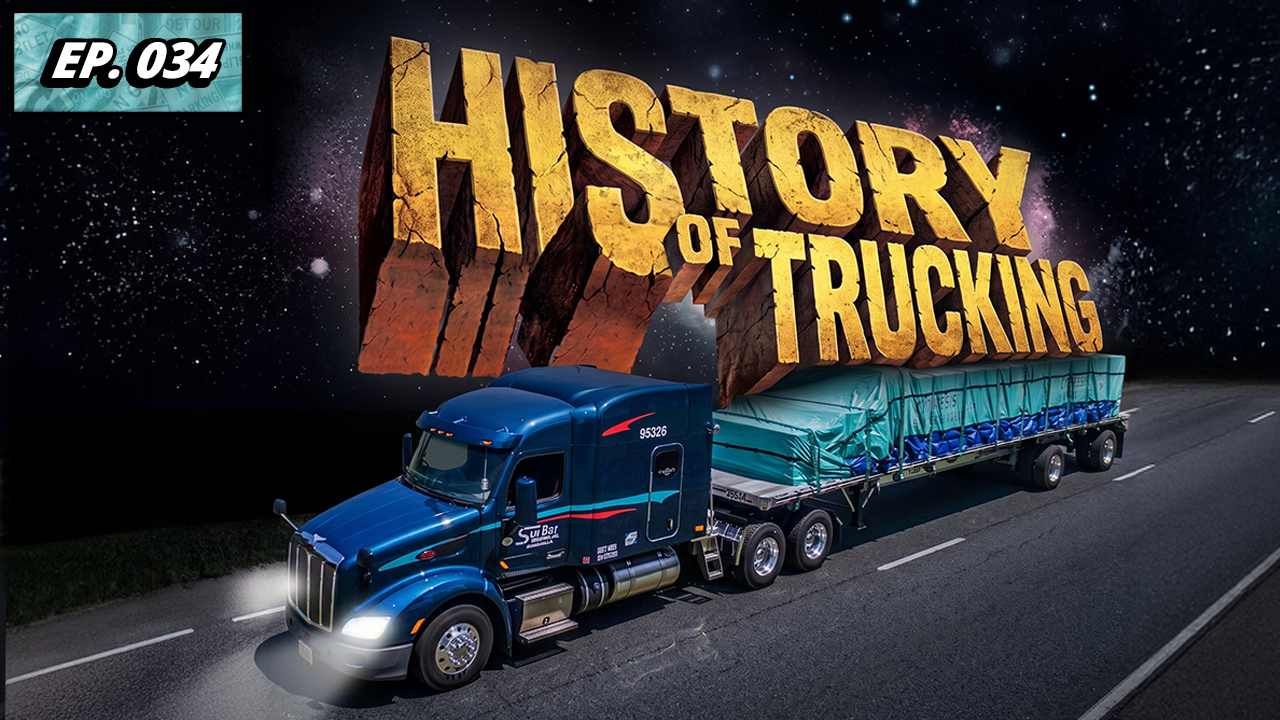
Flatbedding History: From Horse Carts to Modern Trucks
Released 08/26/2026
Ready to play
00:00 / 00:00
00:0000:00
Episode description
Before the diesel engine. Before the interstate highway system. Before the automobile itself. The story of flatbedding goes back further than most people in trucking have ever thought to look, and in Episode 34 of the Cypress Truck Lines Podcast, Marcus takes you all the way back to the beginning. This is a different kind of episode. No guests. No interviews. Just Marcus and a comprehensive look at the complete history of flatbed trucking from the horse-drawn carts that moved the first oversized loads through the early days of motorized freight, the building of the American highway system, the evolution of flatbed design and safety standards, and the modern flatbed industry that Cypress Truck Lines and Sun Belt Trucking operate in today. Whether you have been flatbedding for thirty years or you just got your CDL last month this episode will give you a new appreciation for the road you are already on and the industry you already belong to. Trucking history is American history and this is the story that most people in the cab have never heard told from start to finish. New episodes drop every Wednesday. Subscribe now and know where you came from.
Listen on
Show Highlights
Key moments and takeaways from this episode.
About This Episode
Before the diesel engine. Before the interstate highway system. Before the automobile itself. The story of flatbed trucking goes back further than most people in the cab have ever thought to look. When most people picture a semi truck they imagine a big enclosed trailer rolling down the interstate carrying boxes nobody ever sees. But flatbed trucking is different. Flatbed freight is exposed, visible, and undeniable. Everybody sees the load. Steel beams. Massive coils. Lumber stacked to the sky. Bulldozers. Cranes. Military vehicles. Wind turbine blades are longer than a basketball court. In this special episode of the Cypress Truck Lines Podcast, Trucking Up History takes a comprehensive journey through the complete story of flatbed trucking and the freight that built America, from the open carts of ancient civilizations to the oversize heavy haul operations of the modern era, tracing how the loudest, roughest, and most visible corner of the trucking industry became the backbone of American civilization itself.
EPISODE HIGHLIGHTS
What flatbed trucking actually is: Before the history begins the episode establishes exactly what makes flatbed trucking different from every other form of freight hauling. An enclosed trailer driver backs into a dock and waits. A flatbed driver climbs, straps, chains, tarps, tightens, checks, rejects, adjusts, and then worries about the load for the next 800 miles anyway because flatbed freight does not stay safely hidden behind trailer walls. It moves. It shifts. It catches wind. It freezes. It settles. It fights back. That distinction explains why flatbed has always carried a reputation for toughness and skill that no other segment of trucking can match.
Before trucks, the original flatbeds: The history of flatbedding begins thousands of years before diesel engines existed. Ancient civilizations transported massive stones for Egyptian monuments, timber for Roman ships, and marble for Greek temples on open carts and wagons because enclosed transportation simply was not practical for heavy cargo. The engineering standard was simple and enduring: can this platform survive the trip? Different century. Same problems. The mission that moves freight today is the same mission that moved civilization forward for thousands of years before anyone had heard of a diesel engine.
The birth of trucking and the open deck advantage: By the early 1900s trucks began replacing horses for freight movement but had one enormous advantage over railroads, they could deliver freight directly to the job site. Railroads could get materials close. Trucks could get materials exactly where they needed to go. That distinction changed everything. Early flatbeds were crude by modern standards, little more than reinforced platforms with stake pockets and primitive tie-down systems. No aerodynamic fairings. No anti-roll systems. No electronic logs. No collision mitigation. Just mechanical courage, optimism, and maybe a cigar.
The evolution of cargo securement: As freight became heavier and more specialized cargo security evolved dramatically from instinct, rope, and chains to standardized FMCSA regulations, working load limits, and commodity specific rules. Today's flatbed drivers secure freight using chains, straps, binders, coil racks, edge protectors, friction mats, pipe stakes, and enough equipment to invade a medium sized country. Cargo security is part science, part experience, and part ancient wizardry. That knowledge gets passed down from driver to driver the old-fashioned way because no textbook can fully teach flatbed instincts. Experience does.
Different century. Same mission: The closing image of Episode 34 is the one that stays with you. Somewhere tonight a flatbed driver is tightening chains under floodlights, fighting wind with a frozen tarp, hauling steel through mountain passes, or securing machinery destined for a construction site that does not even exist yet. Different century. Different equipment. Same mission. Move civilization forward. Modern civilization still depends heavily on flatbed trucking, and despite advances in automation and logistics, it still demands something deeply human, skill, judgment, adaptability, and toughness. Because at the end of the day somebody still has to haul the freight that physically builds the world around us.
From The Host
“I have made a lot of episodes in four years of doing this job. This one is different. Trucking Up History is something I am genuinely proud of and the flatbed history episode is the reason why. Every driver who hauls flatbed freight is part of a story that goes back thousands of years. The same basic mission that moved stone columns across ancient Rome is the same mission that puts a Cypress driver on the road tonight. Can this platform survive the trip? That was the engineering standard for the original flatbeds. And in a lot of ways it still is. Different century. Same mission. We will have more of these in the future. Thank you for joining us for this one." — Marcus Bridges, Host
Transcript
Expand to read the full episode transcript.
1
00:00:02,400 --> 00:00:08,040
Welcome into this special episode of the Cypress Truck Lines podcast. This is trucking up history
2
00:00:08,040 --> 00:00:13,920
presented by Cypress Truck Lines. Today on the show, we are going to be talking about the story
3
00:00:13,920 --> 00:00:19,720
of flatbed trucking and the freight that built America. It's an in-depth look at the type of
4
00:00:19,720 --> 00:00:26,040
hauling that everyone for Cypress does. So strap in and get ready to learn about the history of
5
00:00:26,040 --> 00:00:31,760
flatbed here on Trucking Up History, presented by the Cypress Truck Lines Podcast.
6
00:00:37,160 --> 00:00:41,720
Countdown to the Cypress Truck Lines podcast starts now.
7
00:00:44,040 --> 00:00:50,960
Your number one professional flatbed podcast here to deliver stories, safety updates and company
8
00:00:50,960 --> 00:00:55,640
news directly to your ears. Let's get down to business.
9
00:01:02,820 --> 00:01:09,620
The story of flat betting, the freight that built America. When most people picture a semi truck,
10
00:01:09,660 --> 00:01:15,380
they imagine a big enclosed trailer rolling down the interstate, carrying boxes nobody ever sees.
11
00:01:15,460 --> 00:01:22,380
But flatbed trucking is different. Flatbed freight is exposed, visible, unbidden.
12
00:01:22,420 --> 00:01:28,500
Everybody sees the load. Steel beams. Massive coils. Lumber stacked to the sky.
13
00:01:28,700 --> 00:01:35,539
Bulldozers. Cranes. Military vehicles. Gigantic concrete bridge sections. Wind
14
00:01:35,540 --> 00:01:41,380
turbine blades longer than a basketball court. Flatbed trucking has always been the loudest,
15
00:01:41,420 --> 00:01:47,739
roughest, most visible corner of the trucking industry. And unlike many forms of freight hauling,
16
00:01:47,779 --> 00:01:54,580
flatbed trucking demands something extra from the driver. A van driver may back into a dock and wait.
17
00:01:54,660 --> 00:02:01,179
A flatbed driver climbs, straps, chains, tarps, tightens, checks, rejects,
18
00:02:01,220 --> 00:02:07,470
adjusts, and then worries about the load for the next 800 miles anyway, because flatbed freight
19
00:02:07,470 --> 00:02:14,069
doesn't stay safely hidden behind trailer walls. It moves, it shifts, it catches wind. It
20
00:02:14,070 --> 00:02:20,830
freezes. It settles. It fights back. But behind all the chains, binders, tarps
21
00:02:20,830 --> 00:02:27,190
and steel is something much bigger. Flatbed trucking helped physically build modern
22
00:02:27,190 --> 00:02:34,110
civilization. Roads. Cities. Factories. Pipelines. Bridges,
23
00:02:34,110 --> 00:02:40,549
skyscrapers, power plants. Military infrastructure. Flat betting didn't just move
24
00:02:40,550 --> 00:02:47,229
freight, it moved America itself. And honestly, the story starts long
25
00:02:47,229 --> 00:02:53,909
before trucks ever existed. What exactly is flatbed trucking? Well,
26
00:02:53,950 --> 00:02:58,789
at its simplest, flatbed trucking is the transportation of freight on an open trailer
27
00:02:58,789 --> 00:03:05,009
platform without enclosed walls or a roof. That sounds simple enough until you realize just how
28
00:03:05,009 --> 00:03:11,609
much of the modern world cannot fit inside of a normal trailer. Construction materials, industrial
29
00:03:11,609 --> 00:03:18,529
machinery. Oversize equipment. Steel products. Lumber pipe. Concrete products.
30
00:03:18,570 --> 00:03:25,329
Agricultural equipment. Oil field machinery. Military cargo. If it's too heavy, too
31
00:03:25,329 --> 00:03:32,129
tall, too wide, too awkward, or too weird shaped for a van trailer, there's a good chance of flatbed
32
00:03:32,169 --> 00:03:38,609
handles it. And because the freight is exposed to weather and movement, securing it becomes one of
33
00:03:38,609 --> 00:03:45,089
the most important skills in trucking. That's why flatbed has historically carried a reputation for
34
00:03:45,089 --> 00:03:51,849
toughness and skill. A dry van driver closes trailer doors. A flatbed driver
35
00:03:51,850 --> 00:03:58,409
becomes part truck driver, part construction worker, part meteorologist, part engineer, and part
36
00:03:58,449 --> 00:04:03,909
amateur physicist trying to calculate whether 80,000 pounds of Steel is about to. Become
37
00:04:03,910 --> 00:04:10,110
extremely interested in the laws of momentum. Before trucks the original
38
00:04:10,110 --> 00:04:16,670
Flatbeds. Long before diesel engines, humans were already hauling freight. Flatbed style.
39
00:04:16,869 --> 00:04:23,189
Ancient civilizations transported goods on open carts, sleds, and wagons because enclosed
40
00:04:23,189 --> 00:04:29,310
transportation simply wasn't practical for heavy cargo. Massive stones for Egyptian monuments.
41
00:04:29,310 --> 00:04:35,629
Timber for Roman ships, marble for Greek temples and weapons for armies all traveled exposed to
42
00:04:35,630 --> 00:04:42,510
the elements. The original flatbed trailer was basically. Can this platform survive the trip?
43
00:04:42,910 --> 00:04:49,029
That was the engineering standard. And honestly, for thousands of years that was good enough. The
44
00:04:49,029 --> 00:04:55,350
Romans transported enormous stone columns and construction materials across Europe using open
45
00:04:55,350 --> 00:05:01,589
wagons and primitive road systems. Medieval builders hauled timber and stone the same way
46
00:05:01,589 --> 00:05:08,289
while constructing castles and cathedrals. The freight was exposed. The roads were terrible and
47
00:05:08,289 --> 00:05:14,889
the weather was brutal. Different century. Same problems. In many ways,
48
00:05:14,890 --> 00:05:21,290
modern flatbed trucking still operates under the same basic principle. How do we move this gigantic
49
00:05:21,329 --> 00:05:28,009
thing from point A to point B without catastrophe? The equipment evolved, but the mission didn't.
50
00:05:28,450 --> 00:05:35,169
The birth of trucking. By the early 1900s, trucks began replacing horses for freight movement.
51
00:05:35,209 --> 00:05:41,169
At first, trucking itself was considered unreliable compared to railroads. Roads were often
52
00:05:41,170 --> 00:05:48,049
mud, gravel, or barely controlled. Chaos. Tires failed constantly. Suspensions were
53
00:05:48,049 --> 00:05:54,529
brutal. Early engines were temperamental enough to make modern diesel problems look adorable.
54
00:05:55,049 --> 00:06:00,849
But trucks had one enormous advantage over rail they could deliver freight directly to the job
55
00:06:00,849 --> 00:06:07,059
site. Railroads could get materials close. Trucks could get materials exactly where they needed to
56
00:06:07,059 --> 00:06:13,700
go. That distinction changed everything. As America industrialized in the 1920s and
57
00:06:13,700 --> 00:06:20,699
1930s. Factories, steel mills, railroads, oil fields, and construction projects demanded
58
00:06:20,700 --> 00:06:27,179
massive quantities of raw materials and equipment. Open deck trailers became essential because many
59
00:06:27,179 --> 00:06:33,700
industrial products simply couldn't fit into enclosed trailers. Early flatbeds were crude by
60
00:06:33,700 --> 00:06:38,539
modern standards. Most were little more than reinforced platforms with steak pockets and
61
00:06:38,540 --> 00:06:45,299
primitive tie down systems. No aerodynamic fairings, no anti-roll systems, no electronic
62
00:06:45,299 --> 00:06:51,979
logs, no collision mitigation, just mechanical courage and optimism. And maybe a
63
00:06:51,980 --> 00:06:58,859
cigar. Flatbed trucking and the rise of American industry. As cities expanded
64
00:06:58,859 --> 00:07:05,239
and industrial production exploded. Flatbed trucking became deeply tied to America's economic
65
00:07:05,239 --> 00:07:12,159
growth. Steel production especially fueled flatbed demand. America was building bridges,
66
00:07:12,160 --> 00:07:18,639
factories, shipyards, rail systems, oil pipelines and skyscrapers at an
67
00:07:18,640 --> 00:07:24,679
astonishing pace, and almost all of it required open deck transportation.
68
00:07:24,999 --> 00:07:31,199
Structural beams for skyscrapers didn't ride in dry vans. Massive industrial pipes didn't fit
69
00:07:31,239 --> 00:07:37,358
neatly on pallets. Construction machinery didn't politely shrink itself for easier shipping.
70
00:07:37,720 --> 00:07:44,239
Flatbeds carried the physical backbone of industrial America. And then came World War
71
00:07:44,239 --> 00:07:51,079
two, world War two. When flatbed trucking became essential, the Second World War
72
00:07:51,119 --> 00:07:56,920
transformed trucking forever. Factories across America shifted into war production almost
73
00:07:56,920 --> 00:08:03,879
overnight. Steel mills operated constantly. Tank factories, shipyards, aircraft manufacturers,
74
00:08:03,879 --> 00:08:10,858
and military bases consumed unimaginable quantities of material, and Flatbeds hauled much
75
00:08:10,859 --> 00:08:16,820
of it. Think about it. Tanks, aircraft components. Construction machinery.
76
00:08:16,820 --> 00:08:23,700
Generators. Fuel equipment. Steel. Lumber. Bridge materials. America became known
77
00:08:23,700 --> 00:08:29,499
as the Arsenal of democracy, and trucking played a massive role in making that possible.
78
00:08:30,260 --> 00:08:35,219
Flatbed drivers hauled military freight across primitive highways, through crowded industrial
79
00:08:35,219 --> 00:08:41,579
cities, and into rapidly expanding military infrastructure. The image of the rugged American
80
00:08:41,580 --> 00:08:47,380
trucker helping fuel the war effort became part of national culture during this era. And honestly,
81
00:08:47,420 --> 00:08:54,179
it wasn't exaggerated without trucking, especially open deck freight. Wartime production slows down
82
00:08:54,179 --> 00:09:01,059
dramatically. You cannot build an industrial war machine without moving industrial materials. And
83
00:09:01,059 --> 00:09:07,639
for many drivers, the work was dangerous, with long hours on poor roads, minimal safety
84
00:09:07,640 --> 00:09:13,639
regulations, mechanical failures, and exposure to the elements. Flatbed trucking earned its
85
00:09:13,640 --> 00:09:20,238
reputation for toughness during this period because it had to the interstate boom. How
86
00:09:20,239 --> 00:09:26,999
Flatbeds built modern America. If World War two accelerated trucking, the Interstate Highway
87
00:09:27,000 --> 00:09:33,879
system launched it into another universe entirely. Beginning in the 1950s, America entered one of its
88
00:09:33,880 --> 00:09:39,719
largest infrastructure booms in human history. Thousands of miles of interstate highways were
89
00:09:39,719 --> 00:09:46,199
built. Massive suburban expansion was ongoing. Factories were built. Power plants were built.
90
00:09:46,200 --> 00:09:52,239
Bridges were constructed. Commercial buildings were flying off the shelf, dams were built, and
91
00:09:52,239 --> 00:09:58,919
airports were made. The country was physically rebuilding itself at an unbelievable speed, and
92
00:09:58,919 --> 00:10:05,319
flatbed trucks hauled the material for nearly all of it. Flatbed trucking became
93
00:10:05,330 --> 00:10:12,049
inseparable from American growth itself. This era also helped create the mythology of the American
94
00:10:12,049 --> 00:10:18,809
trucker. Chrome covered conventional CB radios. Truckstop diners. Paper maps.
95
00:10:18,849 --> 00:10:24,210
Cowboy boots. Drivers smoking cigarettes while tightening chains, and freezing weather because
96
00:10:24,250 --> 00:10:30,209
OSHA hadn't invented safety meetings yet. Flatbed trucking especially developed a reputation for
97
00:10:30,209 --> 00:10:36,570
grit because the work remained intensely physical, while other freight sectors evolved toward dock
98
00:10:36,570 --> 00:10:43,089
to dock convenience. Flatbed still climbed on loads, handled chains, manually dragged tarps
99
00:10:43,090 --> 00:10:49,369
through snowstorms, and worked directly with freight every single day. Flatbed drivers didn't
100
00:10:49,370 --> 00:10:56,329
just haul freight, they quite literally wrestled it. The legendary battle between
101
00:10:56,330 --> 00:11:02,968
flatbed and tarps at some point in time in flatbed history. Humanity invented the tarp,
102
00:11:02,969 --> 00:11:09,070
and flatbed drivers have been at war with them ever since. To the average person. Tarp looks like
103
00:11:09,070 --> 00:11:15,429
a giant piece of fabric to a flatbed driver. A tarp is an over 100 pound weather resistant
104
00:11:15,469 --> 00:11:21,909
octopus specifically designed to destroy shoulders and dignity simultaneously. Lumber,
105
00:11:21,909 --> 00:11:28,468
tarps. Steel tarps. Machinery. Tarps all of them became exponentially more dangerous when combined
106
00:11:28,469 --> 00:11:34,949
with wind, rain, ice, snow, darkness, or simply gravity, especially
107
00:11:34,949 --> 00:11:41,269
gravity. Every veteran flatbed has a tarp story, usually multiple. There are drivers who have been
108
00:11:41,270 --> 00:11:47,589
blown across loads, slid off icy trailers, taken bungee cords directly to the face. Fort tarps in
109
00:11:47,590 --> 00:11:53,189
Wyoming, wind that felt strong enough to rotate planets or spent two hours securing a load for
110
00:11:53,189 --> 00:11:59,949
the customer to say, oh, sorry, that's the wrong trailer. Flatbed trucking developed a dark sense
111
00:11:59,950 --> 00:12:04,989
of humor because it almost had to. Nobody understands suffering quite like a driver
112
00:12:04,990 --> 00:12:09,968
wrestling frozen tarps at 2 a.m. while questioning every decision that led them there.
113
00:12:10,650 --> 00:12:16,889
The evolution of secure meant as freight became heavier and more specialized, cargo security
114
00:12:16,929 --> 00:12:23,169
evolved dramatically. Early flatbeds relied heavily on instinct, rope chains, and
115
00:12:23,169 --> 00:12:29,329
experience. Modern trucking introduced standardized secure systems, fmcsa
116
00:12:29,330 --> 00:12:36,129
regulations, working load limits, and commodity specific rules. Today's flatbed drivers
117
00:12:36,129 --> 00:12:42,969
secure freight using chains, straps, binders, coil racks, edge protectors, friction mats, pipe
118
00:12:42,969 --> 00:12:49,569
stakes, and enough equipment to invade a medium sized country. Because the stakes are incredibly
119
00:12:49,569 --> 00:12:56,049
high. Flatbed secure failures can be catastrophic. Steel coils can weigh tens of thousands of
120
00:12:56,049 --> 00:13:02,968
pounds. Heavy machinery can shift during braking. Lumber can slide, and pipe can roll. That's
121
00:13:02,969 --> 00:13:09,589
why experienced flatbeds are respected throughout trucking. Security isn't just compliance, it's
122
00:13:09,590 --> 00:13:16,109
survival. Ask any veteran flatbed driver and they'll tell you. Cargo security is part science,
123
00:13:16,109 --> 00:13:22,988
part experience, and part ancient wizardry. You can follow every regulation perfectly and still have
124
00:13:22,989 --> 00:13:28,629
a load. Behave unpredictably if you don't understand how freight moves. That knowledge gets
125
00:13:28,630 --> 00:13:34,870
passed down from driver to driver. The old fashioned way, because no textbook can fully teach
126
00:13:34,909 --> 00:13:41,390
flatbed instincts. Experience does oversize loads and the rise of the heavy
127
00:13:41,430 --> 00:13:48,229
haul. By the 1970s and 1980s, flatbed trucking evolved even further with the growth
128
00:13:48,229 --> 00:13:55,149
of specialized, heavy haul transportation. Steep decks. Double drops, RNNs. Stretch
129
00:13:55,150 --> 00:14:01,549
trailers. Multi axle configurations. Suddenly, trucking companies could move freight that looked
130
00:14:01,549 --> 00:14:07,479
physically impossible to transport. Massive excavators. Industrial turbines. Oil field
131
00:14:07,479 --> 00:14:14,119
equipment. Transformers. Mining machinery. Wind energy components. This all created an
132
00:14:14,119 --> 00:14:21,119
entirely new subculture inside trucking. Oversize hauling. Heavy haul drivers became known as some
133
00:14:21,120 --> 00:14:26,239
of the most skilled operators in the industry because their work demanded route planning, permit
134
00:14:26,240 --> 00:14:32,639
coordination, bridge calculations, escort vehicles, and surgical level precision driving.
135
00:14:34,040 --> 00:14:39,399
You can't casually wing it while you're hauling a 15 foot wide excavator through downtown traffic,
136
00:14:39,840 --> 00:14:46,760
at least not twice. Permits became a world unto themselves. These loads had curfews,
137
00:14:46,760 --> 00:14:53,039
height restrictions, bridge weights, escort requirements and construction detours. Entire
138
00:14:53,040 --> 00:14:59,880
teams often coordinated single oversize shipments. And despite all the technology available today,
139
00:14:59,919 --> 00:15:06,519
many heavy haul moves still feel like controlled chaos held together by experience and caffeine.
140
00:15:06,800 --> 00:15:13,379
Flatbed trucking in the modern world. Today, flatbed trucking supports nearly every major
141
00:15:13,380 --> 00:15:19,939
industry on earth construction, steel manufacturing, agriculture, oil and gas, military
142
00:15:19,939 --> 00:15:26,699
logistics, energy infrastructure, heavy equipment, bridge construction, and renewable energy. And
143
00:15:26,700 --> 00:15:31,579
that's just some of the industries that it supports. Every time somebody sees a crane
144
00:15:31,580 --> 00:15:37,700
assembling a skyscraper, an excavator on a jobsite, a massive concrete bridge beam crossing the
145
00:15:37,700 --> 00:15:43,260
interstate, or wind turbine blades stretching across two lanes of traffic. There's a flatbed
146
00:15:43,299 --> 00:15:49,819
story behind it. Modern trucks are safer, trailers are stronger, security standards are more
147
00:15:49,820 --> 00:15:56,779
advanced. But at the core, the job remains surprisingly unchanged. Solve problems, secure
148
00:15:56,780 --> 00:16:03,579
freight, fight weather, adapt constantly, and keep moving. The modern flatbed driver still
149
00:16:03,580 --> 00:16:10,158
deals with snow, wind, mud. Construction sites. Strap wear. chain inspections, load shifts,
150
00:16:10,159 --> 00:16:16,799
equipment failures and customers who always need just one more thing added to the trailer. Some
151
00:16:16,799 --> 00:16:22,999
traditions never die. The strange brotherhood of flatbed trucking.
152
00:16:23,960 --> 00:16:29,119
Flatbed trucking has always carried a unique culture inside the industry. Partly because the
153
00:16:29,120 --> 00:16:34,439
work is harder physically, partly because the freight is more dangerous, but mostly because
154
00:16:34,480 --> 00:16:41,159
flatbeds share a strange understanding. The job demands participation. You don't simply sit
155
00:16:41,159 --> 00:16:47,959
behind the wheel. You climb, you secure, you think ahead. You solve problems constantly.
156
00:16:48,079 --> 00:16:54,119
And because of that, flatbed trucking often develops incredibly strong bonds between drivers.
157
00:16:54,599 --> 00:17:01,319
Drivers, trade, security tricks, weather stories, tarp horror stories, steel mill survival tactics,
158
00:17:01,319 --> 00:17:07,920
and the exact location of the world's worst yard restroom. And some of that they share right here
159
00:17:07,920 --> 00:17:14,259
on this podcast, knowledge becomes survival currency and every experienced flat bettor
160
00:17:14,300 --> 00:17:20,339
eventually develops the same look slightly tired, slightly sore. Mildly suspicious of weather
161
00:17:20,339 --> 00:17:25,819
forecasts and permanently convinced that every loose bungee cord is a potential assassination
162
00:17:25,819 --> 00:17:31,900
attempt. In conclusion, flatbed trucking may never receive the attention of glamorous technology
163
00:17:31,900 --> 00:17:38,619
industries or futuristic logistics systems, but modern civilization still depends heavily on it.
164
00:17:38,699 --> 00:17:45,498
Flatbeds help build America's highways, its cities, its factories, its bridges, its pipelines, its
165
00:17:45,499 --> 00:17:51,978
power systems and its industrial backbone. And despite advances in automation and
166
00:17:51,979 --> 00:17:58,459
logistics, flatbed trucking still demands something deeply human skill, judgment,
167
00:17:58,460 --> 00:18:04,899
adaptability and toughness. Because at the end of the day, somebody still has to haul the freight
168
00:18:04,900 --> 00:18:10,549
that physically builds the world around us. Somewhere tonight, a flatbed driver is tightening
169
00:18:10,550 --> 00:18:16,109
chains under floodlights, fighting wind with a frozen tarp. Hauling steel through mountain passes
170
00:18:16,109 --> 00:18:22,110
or securing machinery destined for a construction site that doesn't even exist yet. Different
171
00:18:22,110 --> 00:18:28,630
century. Different equipment. Same mission. Move civilization forward.
172
00:18:29,029 --> 00:18:33,709
Thank you so much for joining us on this very special episode of Trucking Up History, presented
173
00:18:33,709 --> 00:18:38,749
by Cypress Truck Lines. We'll have more of these in the future. And for next week, we'll have
174
00:18:38,750 --> 00:18:45,430
another standard episode for you. Ready? Wednesday, 5 a.m. local time. Thanks for listening. Stay safe
175
00:18:45,430 --> 00:18:50,509
out there, drivers. This has been trucking up history on the Cypress Truck Lines podcast.